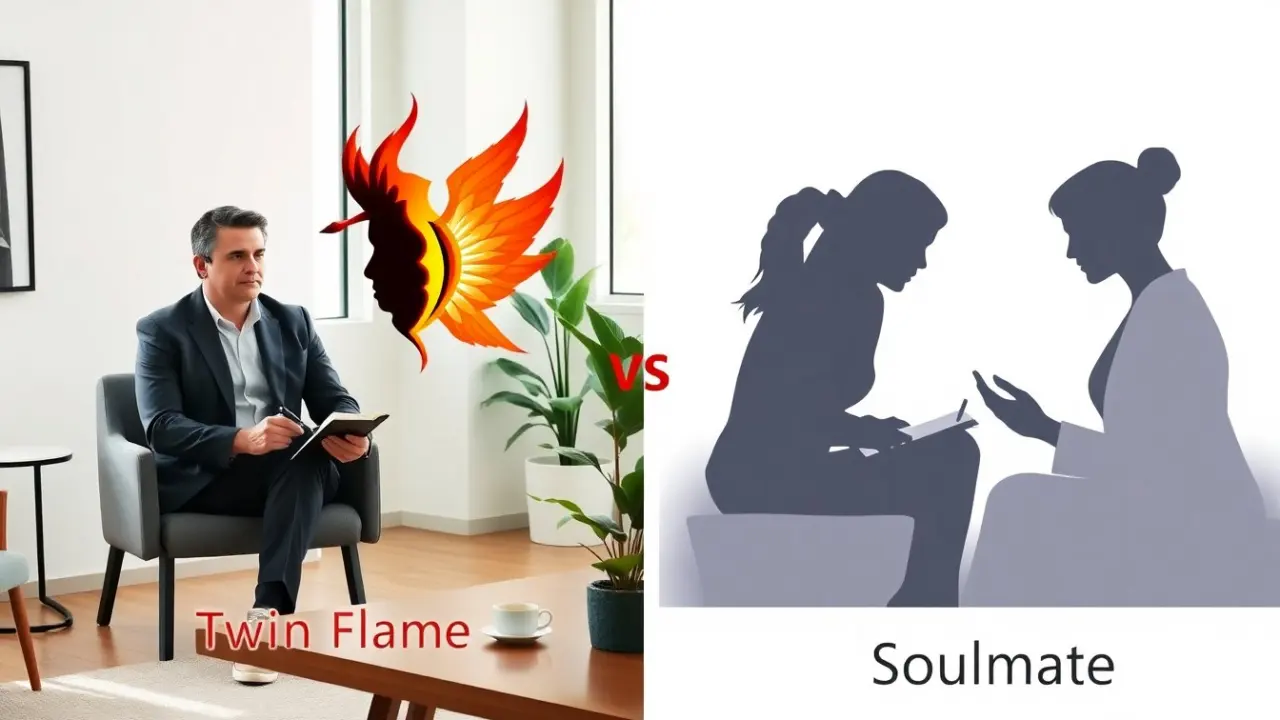
Many people search “twin flame vs soulmate” to find clear answers. This article defines each term, lists signs, and gives practical next steps. It keeps language simple and direct. It avoids vague claims and focuses on observable feelings and actions. The reader will get usable markers to decide which relationship type they face and what to do next.
Key Takeaways
- A twin flame relationship triggers intense emotional shifts and rapid inner change, while a soulmate relationship offers steady comfort and mutual growth.
- Recognizing a twin flame involves noticing emotional extremes, magnetic pull, and timing during life transitions, unlike the stable chemistry of a soulmate connection.
- Use clear signs like emotional impact, physical responses, and shared goals to distinguish twin flames from soulmates effectively.
- Approach both twin flame and soulmate relationships with personal responsibility by setting boundaries, naming feelings, and seeking professional guidance when needed.
- Labels like twin flame or soulmate are useful only if they help clarify actions and promote healthy relationship choices.
- Track progress in any relationship through reduced conflict, honest communication, and consistent follow-through on commitments.
What A Twin Flame Is Versus What A Soulmate Is
A twin flame is often described as a mirror connection. It challenges a person’s identity and triggers fast, intense shifts. A soulmate is often described as a deep fit. It supports growth through comfort and mutual values.
A twin flame brings strong pull and strong push. The connection feels urgent. A person may feel extreme attraction and extreme friction in the same relationship. A twin flame can force a person to face old fears and unhealed wounds.
A soulmate brings ease and shared life goals. A person may feel understood and valued. A soulmate can offer long-term stability and cooperative problem solving.
A twin flame usually appears as a catalyst for inner work. A person may meet a twin flame when they face a major life transition. A soulmate usually arrives when a person seeks mutual support and alignment.
A twin flame relationship may include periods of separation and reunion. A person may leave and return multiple times as both partners change. A soulmate relationship tends to show steady partnership and shared history.
A clear test helps a person tell the difference. If the connection forces rapid inner change and shows repeated conflict plus intense attraction, it likely reads as a twin flame. If the connection provides comfort, cooperation, and long-term fit, it likely reads as a soulmate. The terms can overlap for some people. A person should use the labels only if the labels help them act with clarity and care.
How To Recognize The Signs: Emotions, Chemistry, And Timing
A person can track emotion to tell a twin flame vs soulmate. A twin flame creates emotional extremes. A person may swing from elation to despair in short spans. A soulmate creates steady positive emotion. A person may feel calm and content most days.
A person can observe chemistry to tell a twin flame vs soulmate. A twin flame shows magnetic pull that feels beyond reason. A person may feel like they ‘‘must” be with the other even though frequent conflict. A soulmate shows balanced chemistry that enhances daily life. A person may enjoy shared routines and steady attraction.
A person can check timing to tell a twin flame vs soulmate. A twin flame often appears at a time of personal crisis or rapid change. A person may meet a twin flame when they face a major shift in career, identity, or values. A soulmate often appears when a person seeks long-term partnership and compatibility.
A person can listen to physical signals to tell a twin flame vs soulmate. A twin flame may create physical tension, sleeplessness, or somatic unrest. A person may carry anxiety tied to the relationship. A soulmate usually creates physical ease and reliable comfort.
A person can ask direct questions to test the fit. Does the relationship push a person to change quickly? Does it feel like a mirror that exposes wounds? If yes, the relationship likely reads as a twin flame. Does the relationship provide shared goals, mutual care, and durable peace? If yes, the relationship likely reads as a soulmate. A person can combine signs to form a clearer view.
Navigating Challenges, Healing Patterns, And Healthy Next Steps
A person should treat a twin flame or soulmate with personal responsibility. A person should name feelings, set boundaries, and seek clear help. A therapist or counselor can guide emotional repair. A trusted friend can offer perspective and accountability.
A person facing a twin flame should slow down before acting. A person should pause to notice triggers and recurring patterns. A person should journal feelings, track conflict cycles, and identify core fears. A person should use those notes to decide whether the relationship fuels growth or repeats harm.
A person facing a soulmate should test practical compatibility. A person should discuss money, time, family, and long-term goals. A person should practice everyday problem solving together. A person should notice whether the partnership improves daily life.
A person should use clear boundaries in both relationship types. A person should state needs, enforce limits, and review whether the other person respects them. A person should leave patterns that harm mental health. A person should choose repair when both people commit to change.
A person should plan concrete next steps for healing. Step one: name the pattern and its origin. Step two: set a boundary that protects safety. Step three: seek a professional who can teach emotional skills. Step four: test the relationship against consistent action, not promise alone.
A person should track progress with small markers. A person should note fewer explosive fights, more honest conversations, and clear follow-through on promises. Those markers show healthy change.
A person should remember that labels serve action. If the label twin flame or soulmate helps a person set wise limits and create steady growth, the person should use it. If the label confuses decisions, the person should stop using it and focus on concrete behavior and safety.