If you have a few spare minutes and a restless mind, how to start meditating is simple: sit comfortably, follow your breathing for one to two minutes, as UCLA Health suggests, then return gently whenever attention drifts.
This guide works as a map. Pick the route that matches what you want from practice, try it for a short session, and branch out later. For the wider menu of styles, see types of meditation. For the evidence behind the practice, see the benefits of mindfulness.
Choose your starting route
Most beginners stall because they pick a technique that does not match their situation. A person who feels tense in the shoulders needs a different first practice from a person whose thoughts race at night. Match the technique to the daily problem first, and the habit becomes easier to keep.
- You want to settle a busy mind: start with breath awareness, described below. The mindful breathing exercise guide goes deeper once you have the basics.
- You carry tension in your body: try the body scan. The 5-Minute Body Scan Meditation: Quick Practice To Reduce Stress & Reset Your Day – Lucidinside guide gives a compact version for busy days.
- You would rather follow a voice: use guided practice. Guided Meditation for Beginners: A Simple 10-Minute Practice to Reduce Stress (2026) – Lucidinside walks through a full session. If you want to try apps without paying, see Best Free Mindfulness Apps In 2026: Find Calm, Focus, And Better Sleep Without Paying – Lucidinside.
- Sitting still feels impossible: practise while moving. Mindful Walking: How To Walk With Purpose, Calm, And Focus (2026 Guide) – Lucidinside shows how to bring the same attention to a slow walk.
- Your main goal is rest: a bedtime routine has its own needs, covered in mindfulness for sleep.
- You feel anxious in the moment: use something quick and sensory, such as the grounding techniques for anxiety.
- You are a teenager, or helping one: Mindfulness Exercises for Teens: 4 Simple Practices To Reduce Stress And Boost Focus In 2026 – Lucidinside is written for that age group.
If none of these fits, begin with breath awareness. It needs no equipment, no preparation and no experience, and every other technique builds on the same skill of noticing where your attention has gone.
What mindfulness and meditation actually are
Mindfulness is a meditation-based practice whose aim is to increase one’s sense of being in the present, as described in Harvard Gazette reporting on mindfulness research. Meditation is the formal exercise. Mindfulness is the quality of attention that the exercise trains.
UCLA Health frames mindfulness meditation as a tool that promotes well-being by training the mind to be present. In practice that means moment-to-moment awareness of your thoughts, feelings, body sensations and surroundings. Nothing in that definition asks you to empty your mind or stop thinking. The task is to notice what is happening and, when you drift, to come back.
That distinction matters for beginners. Many people quit after a first session because their thoughts kept running and they assumed they had failed. Noticing that you drifted is the exercise working, not breaking down. If you want shorter, everyday versions of the same skill, What Is A Mindfulness Exercise? Simple Practices To Reduce Stress And Boost Focus In 2026 – Lucidinside and Mindfulness Activities For Adults: 7 Practical Practices To Reduce Stress And Boost Focus – Lucidinside turn the idea into small tasks you can fit around work and home life.
Set up your first session
A good first session needs very little: a comfortable seat, a reason to practise and a time of day you can repeat. Over-preparing is a bigger risk than under-preparing, because elaborate setups are hard to sustain.
Posture
A chair is a perfectly good starting point. Headspace’s beginner walkthrough has you sit comfortably in a chair with your back straight and your hands resting in your lap or on your knees. Floor sitting is optional. If a mat and crossed legs make you shift and fidget, a chair removes that distraction so your attention can go to the practice itself.
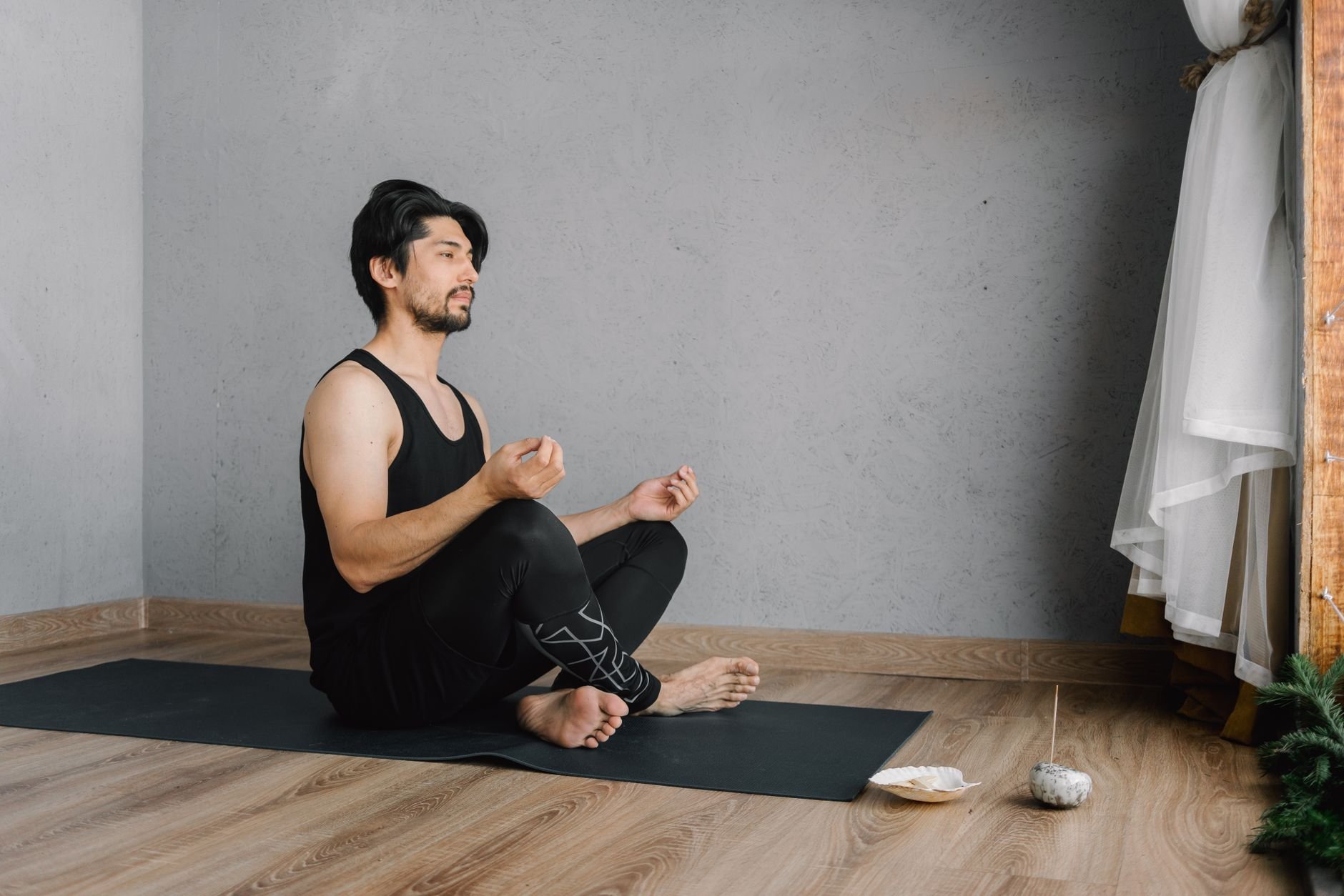
Choose the posture you can hold without effort. Alert but relaxed is the target, and you can adjust mid-session without any penalty. Sitting upright helps most people stay awake, while lying down tends to suit the body scan better for people who want to rest.
Motivation and timing
Start with a reason. Today’s beginner guide suggests your motivation can be as simple as wanting to feel less stressed or more calm. A plain reason like that is enough, and it gives you something to return to on days when practice feels pointless.
The same guide recommends choosing a specific moment in the day and meditating for even just five minutes. Tying practice to a fixed moment, such as after you pour your morning drink or before you open your laptop, removes the daily decision about when to do it. Consistency of timing is a more useful early target than session length.
Route one: breath awareness
Breath awareness is the best default for how to start meditating because the breath is always with you and needs no instruction beyond attention. UCLA Health’s guidance is to turn your attention to your breathing and notice your chest expanding and contracting with each natural breath.
Follow this sequence for your first session:
- Sit in your chosen posture and let your hands rest where they are comfortable.
- Let your breathing run naturally. Do not try to deepen or slow it.
- Rest your attention on the movement of the chest with each breath.
- When you notice your mind has wandered, guide your attention back to the breath without scolding yourself.
- Stop after the time you chose and take a moment before you stand up.
The instruction to guide your attention back when you realise the mind has wandered comes straight from the Headspace ten-minute guide. That return is the repetition that builds the skill, much like a lift in strength training. A session in which you wandered off many times and returned many times is a full session.
Adding counting when the mind is busy
Counting gives a restless mind a task. Headspace describes silently counting the breaths on each inhalation and exhalation, then starting again once the count goes around. If you lose count, you have caught a wandering mind, so the method hands you immediate feedback.
Counting suits people who find plain breath-watching vague. Drop it if the counting itself starts to feel like a test you can fail. The goal is steady attention, not a perfect run of numbers. Once you can follow the breath without strain, the mindful breathing exercise guide offers a longer structured practice to move into.
Route two: the body scan
The body scan moves attention through the body instead of resting it on one point. The Headspace walkthrough has you scan your body from head to toe, observing any tension or discomfort, and take about 20 seconds for each scan.
This route suits readers who feel stress physically, through a tight jaw, raised shoulders or restless legs. Because you have something to find in each area, the exercise gives your attention more to do than the breath does. That makes it a good second technique if breath awareness leaves you bored or fidgety.
Treat what you find as information, not as a problem to fix. If you notice tension, note it and move on; you do not need to relax the area on command. Lying down is fine for this practice if sitting makes you stiff, though you may drift towards sleep. The 5-Minute Body Scan Meditation: Quick Practice To Reduce Stress & Reset Your Day – Lucidinside guide is a compact script you can follow between tasks.
Compare the starting techniques
Each technique trains the same skill but gives attention a different anchor. This table puts the beginner options side by side so you can choose one for your first week.
| Technique | What you do | Starting length | Planning use |
|---|---|---|---|
| Breath awareness | Notice your chest expanding and contracting with each natural breath | One to two minutes to start, then extend | Best default; needs no props or counting |
| Breath counting | Count silently 1 to 10 on inhales and exhales, then restart | Part of a 10-minute beginner session | Pick when plain breath-watching feels too vague |
| Body scan | Move attention from head to toe, noting tension or discomfort | About 20 seconds for each scan | Pick when stress shows up as bodily tension |
Figures come from UCLA Health’s beginner guidance and the Headspace ten-minute walkthrough.
The practical rule is to stay with one technique for several sessions before judging it. Switching every day makes every session feel like a fresh start. If a technique frustrates you after a fair trial, move to the next row rather than abandoning meditation altogether.
Route three: guided and moving practice
Guided practice is a legitimate way in, not a shortcut to apologise for. The Today beginner guide describes apps and podcasts as training wheels for meditation. A voice tells you when to begin, where to place attention and when to return, which removes the guesswork that derails many first attempts.
Guided sessions suit people who feel unsure whether they are doing it correctly, and people who lose the thread without a prompt. The trade-off is dependence: if you only ever practise with a voice, an unguided minute can feel strange. A sensible plan is to alternate, using guidance on harder days and silence when you feel steady. Guided Meditation for Beginners: A Simple 10-Minute Practice to Reduce Stress (2026) – Lucidinside gives you a full session to follow, and Best Free Mindfulness Apps In 2026: Find Calm, Focus, And Better Sleep Without Paying – Lucidinside helps you compare app options before you commit time or money.
Walking is the alternative when stillness is the obstacle. You keep the same instruction, noticing and returning, but your attention rests on the sensations of each step. That suits people who sit all day for work and do not want another seated task. Mindful Walking: How To Walk With Purpose, Calm, And Focus (2026 Guide) – Lucidinside covers the method, and a quiet path or a short stretch of hallway is enough to begin.
How long to meditate each day
Begin shorter than you think you should. UCLA Health says you can spend just one to two minutes to start, then work your way to additional time. That is a legitimate first week, not a token gesture. A session short enough to finish feels like a success, and success makes the next session easier to begin.
From first week to a steady routine
Use the evidence as stepping stones, not as demands:
- Starting point: one to two minutes of breath awareness, per UCLA Health, for the first sessions.
- Comfortable habit: five minutes at a chosen time of day, which is the beginner suggestion in the Today guide.
- Structured session: the 10-minute, eight-step routine in the Headspace walkthrough, which ends with the reassurance that you just meditated for a full 10 minutes.
- Longer practice: UCLA Health suggests that even 20 minutes a day can make a big difference in your life.
The 20-minute figure is a suggestion about what longer practice can offer, not a minimum. Reaching it matters less than showing up on most days at a length you can keep up. Extend by small steps only after the shorter session feels easy, and drop back without guilt if a stressful week makes the longer session feel like a chore.
If you want a middle option with a script to follow, a structured ten-minute session is a reasonable target for the first month. If daily life is crowded, five fixed minutes beats ten sporadic ones.
What research says about mindfulness benefits
The evidence is encouraging but measured, and it is worth knowing both halves. Harvard Gazette reporting says well-designed studies show benefit in a handful of key areas, including depression, chronic pain and anxiety. The same report notes that studies have shown benefits against an array of conditions, both physical and mental, among them irritable bowel syndrome, fibromyalgia, psoriasis, anxiety, depression and post-traumatic stress disorder.
Reading the findings with care
The Harvard coverage is candid about limits. Some reported findings have been called into question because the studies had small sample sizes or problematic experimental designs. A researcher quoted there describes the effect as moderate, on par with other treatments, not better. That is a useful frame: mindfulness is one reasonable option alongside others, not a superior fix. If you are managing depression, chronic pain or anxiety, treat practice as something that can sit next to the care you already have, and raise it with the clinician who looks after you.
The same body of work includes a course-based approach. An ongoing study in depressed patients uses an eight-week course in mindfulness-based cognitive therapy, or MBCT. The eight-week length is a reminder that structured programmes unfold over weeks, not in a single sitting.
UCLA Health lists a wider set of possible gains, including immune boost, emotion regulation, attention, pain relief and the relaxation response. It also lists regulating emotions to counteract depression, anxiety and obsessive-compulsive disorder, and decreasing pain or changing the perception of pain. These are listed benefits rather than measured effect sizes, so read them as areas where practice may help, not as guarantees. For a fuller breakdown, the benefits of mindfulness guide looks at the research in more depth.
Linking each technique to stress and focus
Research findings are easier to use when you tie them to a moment in your day. The listed benefits from UCLA Health include attention and emotion regulation, which map onto the two things most beginners say they want: more focus and less stress. A technique is worth keeping when you can name the situation it helps with.
- Before focused work: use breath counting. Losing count is an immediate signal that attention has slipped, which is the same signal you need while working.
- After a tense stretch: use the body scan to notice where stress has settled, then move on. Spotting the tension is the first step; fixing it is optional.
- In a spike of anxiety: switch to something sensory and brief. The grounding techniques for anxiety are designed for that.
- On a broad stress overload: pick from Mindfulness Techniques For Stress: 7 Simple Practices To Calm Your Mind Today – Lucidinside and keep the one that works.
- At the end of the day: write down what you noticed. The mindfulness journaling prompts give a structure for that reflection.
Keep a simple note of which situation each practice helped with, and review it after a couple of weeks. Your own record of what settled you is more persuasive than any general claim, and it shows which technique deserves your longer sessions.
When practice feels harder than expected
Difficulty in the first weeks is normal and does not signal a mismatch. The usual complaints are restlessness, boredom and a mind that will not quiet. Each has a practical response rather than a reason to stop.
- The mind keeps wandering: that is the material of the practice. Each time you notice and return, you complete one repetition.
- The session feels too long: shorten it. Falling back to the one-to-two-minute starting point from UCLA Health is a sound reset, not a retreat.
- You feel flat or bored: change the anchor. Move from the breath to the body scan, or add counting.
- You miss days: restart at the same fixed time of day instead of trying to make up the lost minutes.
- You want more depth: once a daily habit is steady, a longer, immersive format becomes realistic. Meditation Retreat For Beginners: A Practical 2026 Guide To Your First Transformative Retreat – Lucidinside explains what to expect.
Judge progress by whether you return to practice, not by whether a session felt calm. Some sessions will feel scattered, and they count just as much as the peaceful ones. After a few weeks of regular sittings, you will have enough experience to choose a direction among the routes above.
Frequently asked questions
| Question | Answer |
|---|---|
| Where can I meditate? | You can meditate wherever you are, though UCLA Health says a quiet place is best. Begin somewhere calm, then try busier settings once the skill feels familiar. |
| Do I have to close my eyes? | No. UCLA Health notes you can meditate with your eyes open if that is more comfortable, so choose whichever helps you stay with the practice. |
| Does meditation change the brain? | Some studies suggest so. Harvard Gazette reporting describes a 2012 fMRI study by Sara Lazar at MGH in which brains thickened after an eight-week meditation course, and before-and-after scans by Desbordes of subjects who learned to meditate over two months. UCLA Health also says positive brain changes have been documented after only eight weeks. What those changes mean for everyday experience is a separate question. |