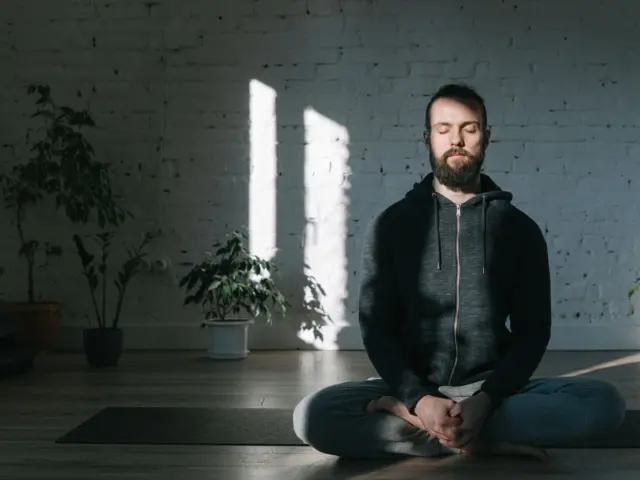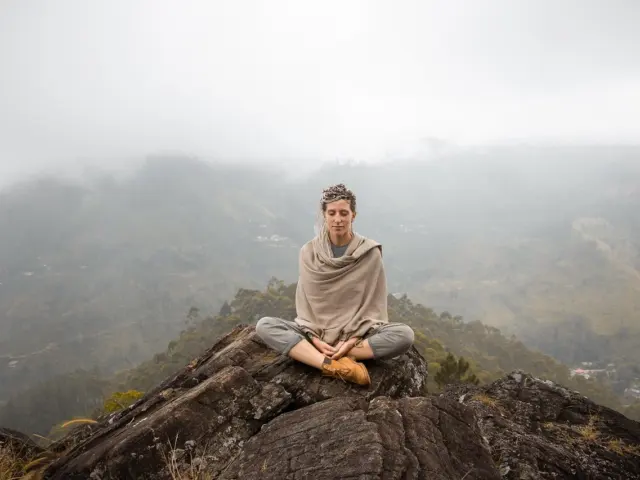
A tense meeting ends and the next task needs focus. Mindfulness activities for adults fit that gap: a few slow breaths, a quick body check or a short walk, practised regularly rather than perfectly.
Most hesitation comes from a handful of misunderstandings about what counts as practice. If you are brand new, how to start meditating covers the groundwork. This guide matches short activities to the time and setting you actually have.
What mindfulness activities involve
Mindfulness is conscious, present-moment awareness, practised intentionally and non-judgmentally, and it is often anchored on the breath. McGill’s continuing studies team describes it this way and adds that regular practice can reduce stress and boost concentration. That definition is the filter for every activity below: if an activity trains you to notice what is happening now without criticising it, it qualifies. If a younger person in your household wants a version pitched at them, Mindfulness Exercises for Teens: 4 Simple Practices To Reduce Stress And Boost Focus In 2026 – Lucidinside is the better starting point.
| Common assumption | What the evidence supports | Planning use |
|---|---|---|
| Mindfulness is a special state of calm you have to reach | It is present-moment awareness practised intentionally and non-judgmentally | Judge a session by whether you noticed, not by whether you felt calm |
| You need long sessions | Guided audio recordings run from 5 minutes to half an hour | Choose a recording at the short end when time is tight |
| Only sitting still counts | Options include yoga, mindful walking or hiking, swimming, dancing and cycling | If sitting is uncomfortable, start with movement |
| It needs its own time slot | Showering, driving and washing dishes can serve as practice moments | Attach practice to a routine you already do |
| It replaces treatment | Mindfulness alone cannot replace mental health treatment | Use it alongside professional care for ongoing symptoms |
Figures and definitions here come from McGill University’s continuing studies guide and Medical News Today’s overview of mindfulness activities.
Thoughts do not have to stop
The most common reason people quit is the belief that a busy mind means failure. The guidance points the other way: thoughts are fleeting; they come and go. One exercise asks you to picture each thought as a bubble floating along a river, then let it drift past instead of following it.
When you notice your attention has wandered, that noticing is the practice. The instruction is to be gentle with yourself and kindly guide your attention back to the exercise. Treat each return as a repetition rather than a mistake, and a restless session still counts.
Mindful breathing: the easiest entry point
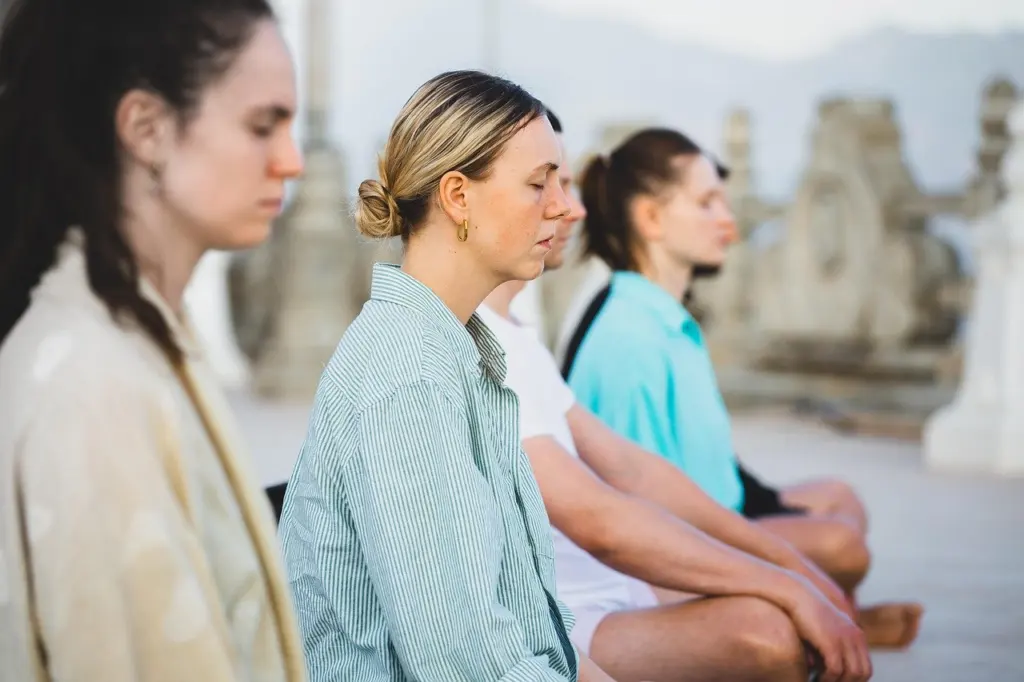
Breathing needs no equipment and works in a chair, which is why it suits most adults as a first activity. McGill describes a simple formula: inhale through the nose for 4 long seconds, and exhale through the mouth for 4 long seconds. The same guide explains why it helps: under stress we take shallow breaths, and deeper belly breaths calm the nervous system.
For a slightly more structured version, the breathing space exercise described by iPractice has five steps. Sit quietly, treat the breath as an anchor you can always return to, notice its rhythm and where you feel it, then close the exercise deliberately. The closing step matters because it marks a clear end and makes the practice easy to repeat between tasks.
Body-based and sensory practices
When breathing feels too abstract, move attention through the body or the senses instead. These two suit different moments.
- Body scan for winding down. Attention moves gradually from head to feet, noticing bodily sensations in sequence. McGill notes that check-ins can happen at any time of day, so you can use it after work or in a quiet pause. A fuller walk-through is in 5-Minute Body Scan Meditation: Quick Practice To Reduce Stress & Reset Your Day – Lucidinside.
- Five senses for sudden overwhelm. Name 5 things you can see, 4 you can touch, 3 you can hear, 2 you can smell and 1 you can taste. The countdown gives a racing mind a concrete job, which makes it a good choice when you need to settle quickly rather than sit for a while.
- Muscle relaxation for physical tension. Progressive muscle relaxation involves tensing and relaxing muscles from the feet up to the head. It suits people who carry stress in the body and find it easier to feel a contrast than to observe a subtle sensation.
Mindful movement for people who cannot sit still
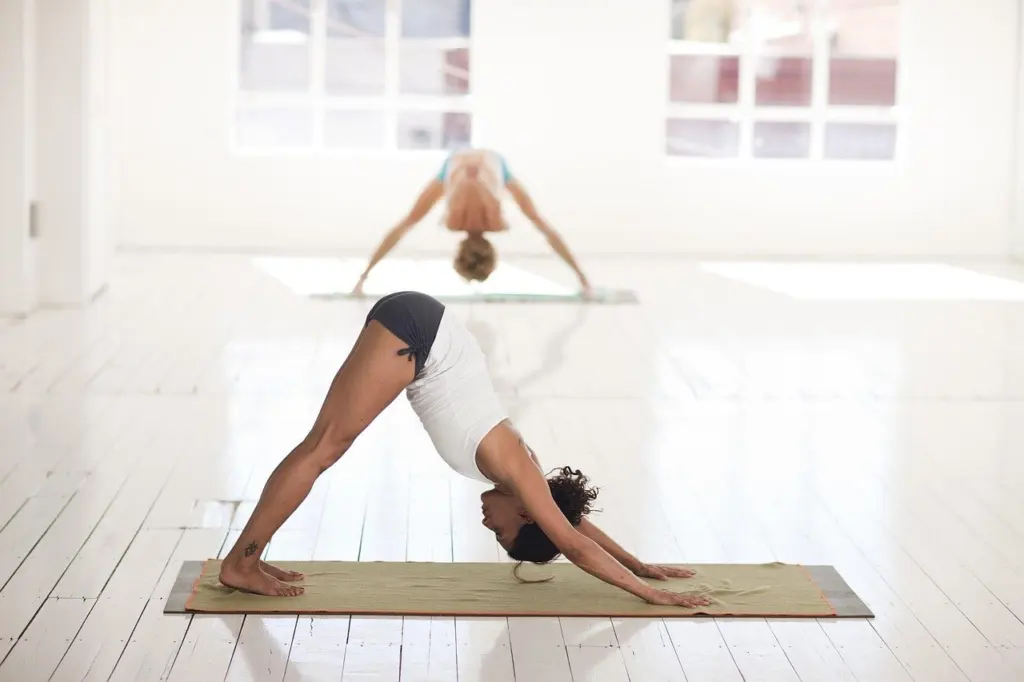
Mindful physical activities help people focus on the present through body movement and breathing. A 2017 study cited by Medical News Today indicates that mindful physical exercise can enhance attention and reduce mind-wandering. For adults who find seated practice frustrating, gentle stretching, yoga or a deliberate walk is a reasonable first choice rather than a second-best one.
The mindful part is where you put your attention, not how hard you work. Link your breath to the movement and notice the sensations of each position instead of chasing a result.
Mindfulness at work
Work rarely offers a quiet room, so choose practices that survive interruptions and take little time. Match the practice to the moment:
- Between tasks. Use the 4-second in, 4-second out breathing from earlier as a reset before you open the next thing.
- During long screen stretches. The 20-20-20 habit is to look at something at least 20 feet away for 20 seconds every 20 minutes, which can reduce eye strain. Use that look-away moment to notice your breath or posture as well.
- When overwhelm spikes. The five senses countdown works without anyone noticing, and it pulls attention to the room you are in.
- During routine moments. McGill suggests showering, driving and washing dishes as practice moments, for example by feeling the sensations and warmth of the water. A commute or a coffee break can work the same way.
Open-plan noise is not a barrier. iPractice notes you do not always have to practise in silence: notice sounds coming and going rather than resisting them.
Choosing how long to practise each day
No single daily duration is established, so the practical question is what you will repeat. McGill’s guide points to guided audio recordings ranging from 5 minutes to half an hour, which gives a sensible range to choose from. Beginners and people with crowded days should start at the short end and lengthen only when the habit holds.
Consistency matters more than length. Practising at a set time of day or week helps make mindfulness a habit, because routine does the remembering for you. Tie the activity to something already fixed, such as the first coffee or the end of the workday.
What the research does and does not show
McGill states that practised regularly, mindfulness can reduce stress and boost concentration. That is a general tendency, not a promise of a particular result. The supporting research in this area is varied: a 2018 systematic review found that creative arts therapies improved stress-related outcomes in over 80% of the studies examined, and a paper titled “Brief mindfulness meditation training reduces mind-wandering: The critical role of acceptance” (Rahl et al., 2017) is among the work Medical News Today cites on attention.
The limit is just as clear. Mindfulness alone cannot replace mental health treatment, so see a doctor or therapist if symptoms continue. Treat these activities as a daily support for stress and focus, not as a stand-in for care.
Frequently asked questions
| Question | Answer |
|---|---|
| Which breathing techniques exist beyond simple counted breaths? | Medical News Today names diaphragmatic breathing, 4-7-8 breathing and box breathing as examples. Try one at a time so you can tell which settles you best. |
| Are guided apps useful? | They can help if you prefer a voice to follow. McGill names Calm, RespiRelax and Insight Timer as apps with many guided breathing exercises and meditations. |
| Do I need a silent room? | No. Practice does not need silence; you can notice sounds as they come and go instead of fighting them. |
| Is gratitude practice a form of mindfulness activity? | It can sit alongside one. McGill points to a 10-minute gratitude meditation recording and notes gratitude is associated with improved sleep, mood and immunity. These are associations, not proof of cause. |