What is mindful walking? It is walking with the intention of being present with every step, not walking in order to arrive somewhere. A short version fits into a normal day when you give a walk you already take your full attention.
The definition comes down to attention. A Flinders University student wellbeing guide describes the intention as bringing you into the present moment with every step. Mindful.org’s walking meditation instructions stress that the practice is not about getting anywhere on foot. A practical starting point is a stretch of at least 5 minutes during a walk you take anyway, as Healthy Monday suggests.
If you are new to meditation in general, our guide on how to start meditating covers the wider foundations. This article stays with the walking version.
How mindful walking works
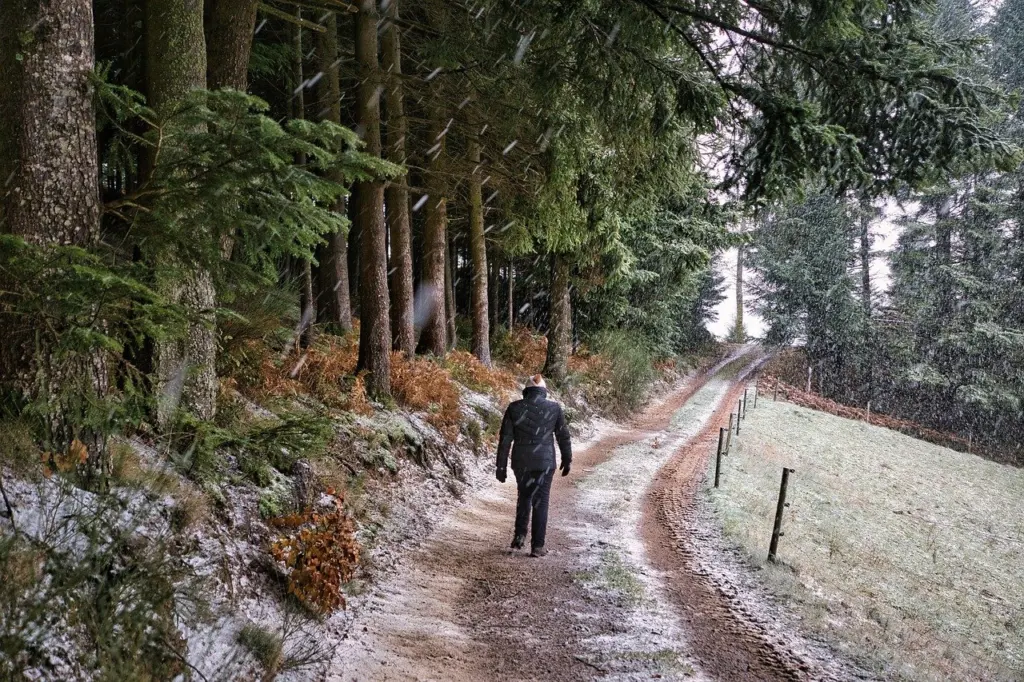
Ordinary walking is organised around the destination, so attention runs ahead of the body to the next task. Mindful walking reverses that. The step itself becomes the object of attention, and the body supplies the anchors: weight, contact with the ground, breath. Each time your mind drifts to the route, the schedule or a worry, you notice it and return to a physical sensation.
Because the anchor is sensation rather than scenery, the practice does not depend on a special place or a long route. Mindful.org calls the formal version mindful walking meditation and describes it as being about each step rather than arrival. That is why the same practice can sit inside a commute, a lap of the garden or a corridor at work. The skill is the same wherever you do it, and the next section shows what to attend to.
The anchors you can feel while walking
Attention needs something specific to hold. The guides in this area point to a small set of physical anchors, and you can begin with whichever feels clearest.
- Weight and floor contact. The Flinders guide begins standing still and feeling the weight of the body balanced on the feet. Starting from stillness gives you a clear baseline before movement begins.
- Breath. The same guide notes that attention can rest on the feeling of the breath flowing in and out as you walk. Treat this as noticing, not controlling.
- The phases of a step. The Mindfulness App breaks each step into four phases: lifting (the heel rising), moving (the foot swinging forward), placing and shifting. Beginners can follow just one phase at first, such as lifting, before trying to track all four.
- A soft gaze. The same guide advises keeping a soft gaze about 6–8 feet ahead rather than looking down at your feet. You keep the path in view while the feet are felt rather than watched.
With the anchors identified, you can put them in order and turn them into a short routine.
A 5-minute routine for a normal day
This routine is built to fit around a walk you already take, such as walking the dog or going to work, which is where Healthy Monday suggests practising. Allow at least 5 minutes, and spend most of that time on the middle steps rather than hurrying through the list.
- Stand and arrive. Stop before the first step. Feel the weight of your body balanced on your feet, as the Flinders guide begins.
- Set the intention. Decide to be present with each step. The walk is not a means of getting somewhere for these minutes.
- Start at a natural pace. Let your gaze rest softly about 6–8 feet ahead instead of dropping to your shoes.
- Follow the step. Notice lifting, moving, placing and shifting. If all four feel like too much, stay with the lift of the heel.
- Add the breath. Let awareness include the breath flowing in and out alongside the steps.
- Count if the mind races. Count your steps from one to ten, then repeat. The count gives a busy mind a simple job and a clear place to return to when it wanders.
- Stop and stand. Finish as you began, feeling your weight on your feet again before you move on with your day.
Afterwards, you might jot down a line about what you noticed. The mindfulness journaling prompts give you somewhere to put it if you want a record.
How long a mindful walk should be
A mindful walk can be as short as 2–3 minutes or as long as 10–30 minutes, depending on the kind of practice. Shorter sessions suit walks you are already taking. Longer ones suit time you set aside deliberately.
| Format | Length | Planning use |
|---|---|---|
| Informal practice on routine walks | 2–3 minutes of focused attention | Use when time is tight; it is enough to start building the habit. |
| Starter routine | At least 5 minutes, ideally during a regular activity | Matches the routine above and attaches to a walk you already do. |
| Formal practice | 10–30 minutes, with no destination or errands in mind | Choose when you can set time aside and walk purely for the practice. |
These figures come from The Mindfulness App’s guide to daily-life walking and Healthy Monday’s step-by-step guide.
For most beginners, the starter length is the sensible default, because it asks for little extra time and still gives the steps a real chance to register. Move towards the formal range only when the short version feels routine. Pick the length you will actually repeat, since a short walk done regularly is easier to keep up than a long one that keeps getting postponed.
Fitting mindful walking into the day
The easiest way to make the practice stick is to attach it to a walk that already has a place in your schedule. Healthy Monday gives walking the dog and going to work as examples of regular occasions that work well. The Mindfulness App makes the same point about routine walks, noting that even 2–3 minutes of focused attention during them can help build the habit.
The distinction between informal and formal practice matters here. Formal practice, as The Mindfulness App describes it, means walking with no destination or errands in mind. A commute or a trip to the shops is therefore a good place for informal practice, but it is not the setting for a long, undisturbed session. If you want the longer version, protect a separate slot for it rather than trying to squeeze it into a walk that has a deadline.

Some people also like to pair walking with a seated practice. If you would rather hear spoken instruction before trying a walk on your own, Guided Meditation for Beginners: A Simple 10-Minute Practice to Reduce Stress (2026) – Lucidinside offers a guided sitting practice you can try first.
Frequently asked questions
Do I have to walk slowly?
No. Walking meditation can be practiced at any number of different speeds, from slow to faster walking, according to Mindful.org. Choose a speed at which you can still follow the sensations of each step.
Can I practice mindful walking indoors?
Yes. The Mindfulness App notes that walking barefoot or in thin socks indoors can enhance your awareness. Mindful.org says a short lane walked back and forth is fine, with about ten paces each way.
Can I match my breathing to my steps?
You can, if it feels natural. The Mindfulness App suggests taking two to three steps as you inhale and three to five as you exhale. If the pattern feels forced, go back to simply noticing the breath flowing in and out.
Is there a guided walking practice from Jon Kabat-Zinn?
Mindful.org’s walking meditation instructions are adapted from Jon Kabat-Zinn’s Guided Mindfulness Meditation Series 3, an MBSR-linked series. It is a useful reference if you prefer to follow instructions that come from that tradition.