| Situation | What the guidance supports | Planning use |
|---|---|---|
| Early stress signals | Stress can show up in the body before you notice it in the mind. | Scan when you first feel tension, not after the mood has already turned. |
| Racing thoughts in the evening | A body scan can be especially helpful at night to quiet racing thoughts. | Use it as a wind-down and lie down if you like. |
| Reconnecting with the body | Headspace calls the body scan one of the most accessible meditation techniques for reconnecting with your body and calming your mind. | A sensible first technique for a beginner. |
| Softening tension | AFN describes noticing sensations, softening tension when you can, and reconnecting with the present. | Treat noticing as the task and softening as a welcome extra. |
Figures and wording in the table come from AFN’s body scan script guide and Headspace’s body scan guide.
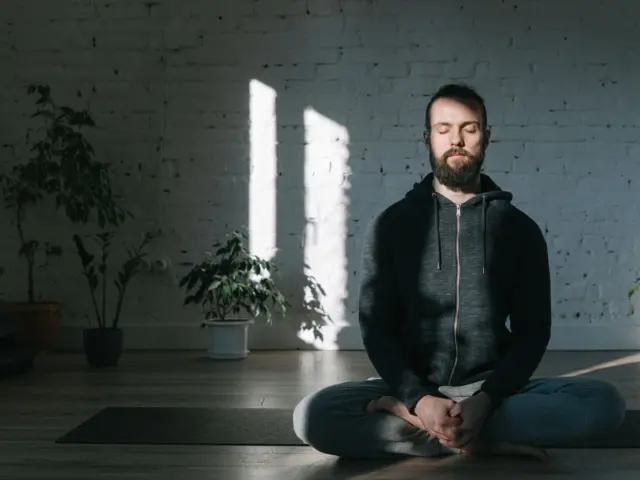
A body scan meditation 5 minutes long works as a reset at a desk or on a mat: sit or lie down, breathe, then move attention through the body and let tension soften where you can.
If meditation itself is new to you, read how to start meditating first, then return here for a version that fits into a busy day.
Practical effects of a short body scan
AFN defines a body scan as a short practice in which you notice sensations, soften tension when you can, and reconnect with the present. That definition shapes what you should expect from five minutes. You are checking in with your body, and a calmer state may follow. It is not a performance you can fail.
- Catch strain early. Headspace notes that stress can show up in the body before you notice it in the mind. A scan before a difficult conversation or after a long stretch of screen work can pick up signals that a quick “how do I feel?” question misses.
- Reset between tasks. Insight Timer describes a simple 5-minute body scan you can use at any time of the day. Tie the practice to a transition, such as finishing a meeting or arriving home, rather than to a fixed clock time.
- Wind down at night. Headspace says a body scan can be especially helpful in the evening for quieting racing thoughts. If this is your main use, lying down suits you, and the sleepiness notes below apply.
- Start with a low bar. AFN’s wording is “when you can”, which means a session in which you only noticed sensations still counts. Beginners who expect instant relaxation tend to judge the practice too harshly, so judge it by whether you paid attention.
Where you practise changes how alert you stay, so the next decision is your position.
Choosing a position and setting
AFN’s guidance is plain: sitting is fine and lying down is fine. The better choice is whichever one you will actually repeat, and your situation usually decides it.
- In a chair or at a desk. This suits workday breaks. The Mindful.org script opens by asking you to feel the soles of your feet or wherever your body makes contact with your seat, so a chair gives you obvious contact points to start from.
- On a mat or a bed. This suits evenings and quiet moments at home. The trade-off is drowsiness, which the troubleshooting section below covers.
- A mix of both. Sit during the day and lie down at night. The two settings do different jobs, so a single fixed position is not required.
Once the setting is settled, the practice itself is a short sequence you can run from memory.
A five-minute body scan script
The sequence below follows the order used in the Insight Timer recording, which works upward from the feet, and the opening cues from Mindful.org’s guided scan. Read it through once, then run it from memory or alongside a recording.

- Settle. Sit or lie down and let your eyes close or stay open.
- Feel your contact points. Notice the soles of your feet or wherever your body touches the seat or mat.
- Breathe in. Take a few deep breaths into the abdomen, filling the belly, and exhale slowly.
- Scan the lower body. Move from the feet to the ankles, calves and shins, knees, thighs and hips.
- Scan the torso. Bring attention to the abdomen, the chest and the shoulders.
- Scan the upper body and head. Move through the arms, the neck, the jaw and the face.
- Widen out. Let attention rest on the whole body at once.
- Close. Notice your posture, then bring the session to a close and carry on with your day.
If one area stays tight, AFN offers an optional step: gently tense that area for three seconds, then let it go. Use it sparingly, only on a spot that does not respond to attention alone.
Pacing is the main difficulty in a short version. Headspace suggests spending a set time on each area in a fuller scan. A five-minute session cannot give every area on the list that long. Group the areas into broad regions, such as legs, torso, arms and face, and spend your time there. Use a gentle timer rather than checking the clock, so the end of the session does not interrupt it.
Troubleshooting a short body scan
If you fall asleep
Falling asleep is not a failure. Headspace says sleepiness is a sign your body may be deeply tired, and that’s okay. What you do next depends on what you wanted from the session.
- You wanted rest. Keep lying down and let the scan carry you toward sleep. This is a reasonable use of an evening session.
- You wanted a daytime reset. Headspace advises that if you often nod off, you try practising upright or during the day. Move from the bed to a chair, and avoid scheduling the scan right before bed.
If attention turns anxious
Some people find that focusing inward makes them more uneasy rather than calmer. AFN’s instruction is to switch to looking around the room and naming five neutral things you see. Treat this as a legitimate adjustment, not an abandoned practice. It moves attention outward and gives you something concrete to hold.
If attention drifts
Attention wandering is part of the practice. Return to the last area you remember and carry on, and use the slow breaths from the opening as your reset point.
Why the body is a useful place to look
The scan rests on the idea in the Headspace guide that stress shows up in the body before the mind registers it. Moving attention region by region trains you to read those early signals and gives you a prompt to respond. Breathing plays a supporting role here. The Mindful.org script uses a few deep abdominal breaths and a slow exhale to open the session, and then attention moves on to the body.
Headspace draws a contrast with breath awareness, which keeps the focus on the inhale and exhale throughout. A body scan keeps moving, which many people find easier to follow than a single point of focus. If staying with the breath alone feels dull or restless, the scan offers variety while keeping the breath available as an anchor.
Building on the five minutes
Once the five-minute version feels familiar, a slightly longer session in Guided Meditation for Beginners: A Simple 10-Minute Practice to Reduce Stress (2026) – Lucidinside gives you more room to explore. For other short practices that fit into a working day, see Mindfulness Activities For Adults: 7 Practical Practices To Reduce Stress And Boost Focus – Lucidinside.
Frequently asked questions
Can I stop partway through or skip an area?
Yes. AFN states that you can stop at any time, and skipping an area that feels uncomfortable is a reasonable way to keep the practice gentle.
Do my eyes need to be closed?
No. AFN says you can do the practice with your eyes open or closed. Choose open eyes at a desk, or if closing them makes you drowsy.
Is there a shorter version?
Yes. Headspace offers a three-minute body scan for days when five minutes is too much.
Which guided recordings run about five minutes?
Mindful.org offers a guided scan with a runtime of 5:57, and Insight Timer’s 5-Minute Body Scan To Manage Stress runs 05:39. Either one is a convenient way to follow the sequence without watching the clock.