What is a mindfulness exercise? It is a short, repeatable practice of paying attention to the present moment, often anchored on the breath, with openness, curiosity and acceptance. Its value comes from regular repetition, not from one long session.
This guide explains how the practice works, gives a simple breathing routine, and sets out what trials do and do not show. For a wider look at how to start meditating, the beginners hub covers the broader path.
How a mindfulness exercise works
Mindfulness is characterized by paying attention to the present moment with openness, curiosity, and acceptance. A mindfulness exercise turns that attitude into a drill: pick something to attend to, notice when attention has drifted, and bring it back. The noticing and returning are the exercise. Staying focused for the whole time is not the goal.
That fits the word’s roots. A Wharton neuroscience overview notes that the Sanskrit term is commonly rendered as remembering to come back to the present moment. The same overview describes meditation as a mental exercise that uses techniques such as breath pacing to raise external or internal awareness. A mindfulness exercise is therefore a form of meditation, usually a brief and plain one.
What the research links to practice
The Wharton overview reports that behavioural studies suggest mindfulness meditation benefits several cognitive domains, including attention, memory, executive function and cognitive flexibility. It also cites a meta-analysis of 21 neuroimaging studies with a total of 300 subjects on how mindfulness relates to brain changes. Two cautions come with these findings. Most of the studies have very small samples, and the cognitive benefits require consistent practice over three stages of development. For a beginner, that points to regular practice as the main variable under your control.
Parts of a mindfulness exercise
Almost every mindfulness exercise has the same three parts, whatever the technique. Knowing them lets you adapt a practice without losing what makes it work.
- An anchor. This is the thing you attend to. The breath is the usual choice because it is always available and needs no equipment.
- A return. Attention will wander. Each time you notice and come back to the anchor, you have done one repetition of the skill.
- An attitude. Openness, curiosity and acceptance are part of the definition. A harsh reaction to a wandering mind works against the practice.
Jon Kabat-Zinn of the University of Massachusetts Medical School is described in the Wharton overview as a well-known figure in popularizing mindfulness. His view, quoted there, is that you do not have to be a Buddhist or a yogi to practise it. The exercises below need no belief system, only attention.
A simple breathing exercise for beginners
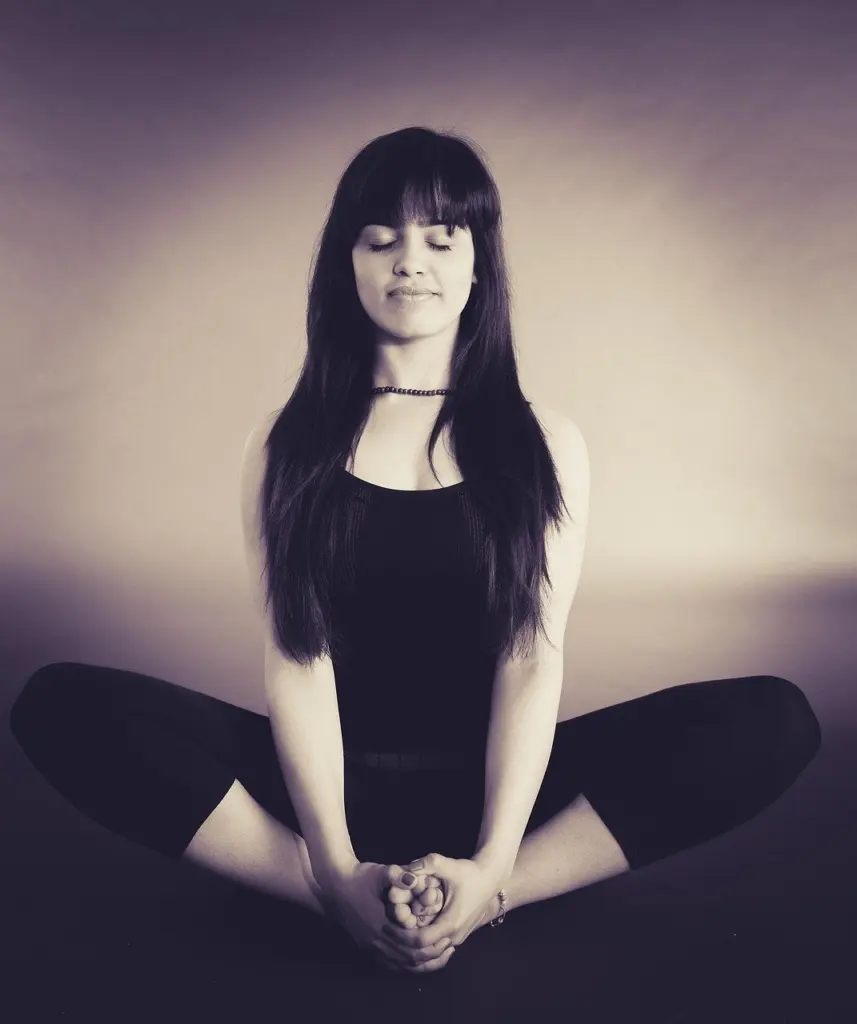
A simple exercise for beginners is breath-focused sitting. Harvard Health describes the basic form as sitting comfortably, focusing on your breathing, and bringing your mind’s attention to the present. Everything else is detail.
- Settle into a comfortable seat. Choose a chair or cushion you can stay in without fidgeting. Comfort matters more than a perfect pose.
- Pick a breath sensation. Notice air at the nostrils or the movement of the chest or belly, and stay with that spot.
- Let the breath run on its own. You are observing it, not controlling it.
- Notice the drift, then return. When your mind moves to plans or worries, note that it moved and go back to the breath without scolding yourself.
- Finish slowly. Take a moment before standing and notice how you feel.
If you like a phrase to hold attention, Harvard Health quotes a short Thich Nhat Hanh line: “Breathing in, I calm my body. Breathing out, I smile.” A phrase suits people whose minds race, because it gives the attention something specific to do. People who find words distracting can stay with the raw sensation instead.
The usual pitfall is concluding that a busy mind means failure. A session full of drifting and returning has still exercised the skill. If sitting still is uncomfortable, change position rather than abandon the practice.
What trials show, and what they do not
Evidence is strongest for structured, repeated practice over weeks, and it varies in quality. The table lists the technique comparisons that trials have made, with a note on how to use each.
| Practice tested | Comparison and result | Planning use |
|---|---|---|
| Focused breathing meditation | Adults aged 55 to 75 practised for eight weeks against a control activity; the breath group had significantly better attention on the Stroop test. | Supports a breath-based exercise if your goal is focus, provided you keep it up over weeks. |
| Mindfulness training | Compared with progressive muscle relaxation, those who learned mindfulness had significantly greater reductions in systolic and diastolic blood pressure. | Mindfulness is worth trying alongside relaxation methods rather than being treated as a mere substitute for them. |
| Eight-week MBSR course | Elderly participants were randomly assigned to the course or to moderate-intensity exercise. | Shows MBSR is studied as a structured course, not a single sitting, and is tested against other healthy habits. |
These comparisons are reported in Greater Good Science Center’s summary of mindfulness research.
Limits worth knowing
A Johns Hopkins review, described by Harvard Health, found 47 trials that met its criteria for well-designed studies among about 19,000 meditation studies. The same article notes that many studies lack a good control treatment to compare with mindful meditation. It also reports a trial in which a mindfulness-based stress reduction program helped quell anxiety symptoms in people with generalized anxiety disorder.
Pain is a good example of measured claims. A systematic review in a peer-reviewed analysis of chronic pain trials included 38 randomized controlled trials, and only seven reported on safety. It found low-quality evidence that mindfulness meditation is associated with a small decrease in pain, and called for additional rigorous, large-scale trials. Greater Good adds that nothing suggests mindfulness is a standalone treatment for disease. Treat a mindfulness exercise as a support for stress and attention, not a replacement for medical care.
How long and how often to practise
Research has not settled a recommended number of minutes per day, so build the routine around what you can repeat. The trials above tested courses of eight weeks, and the Wharton overview stresses consistent practice. A short exercise done regularly is a better starting point than a long one you abandon.
Two practical rules follow from this:
- Start at a length you will actually keep. If a session feels like a chore, shorten it before you drop it.
- Judge it over weeks. The trials measured change across weeks of practice, not after a single sitting, so expect gradual results.
Fitting a mindfulness exercise into the day
Attach the practice to something you already do, such as the first quiet moment after waking or a break between tasks, so that it does not depend on remembering. The same return-to-the-present skill can be used outdoors or at a desk, wherever you can pause and attend to one thing.
If you are weighing a longer commitment later, Meditation Retreat For Beginners: A Practical 2026 Guide To Your First Transformative Retreat – Lucidinside looks at what a first retreat involves. For practices aimed squarely at tension and worry, see Mindfulness Techniques For Stress: 7 Simple Practices To Calm Your Mind Today – Lucidinside.
Frequently asked questions
Do I need to be Buddhist to do a mindfulness exercise?
No. Jon Kabat-Zinn is quoted in the Wharton overview saying you do not have to be a Buddhist or a yogi to practise mindfulness.
Is a mindfulness exercise the same as meditation?
A mindfulness exercise is a form of meditation. Meditation is described as a mental exercise using techniques such as breath pacing to raise awareness, and a mindfulness exercise applies that to present-moment attention.
What is MBSR and who developed it?
Mindfulness-based stress reduction (MBSR) is a training program developed by Dr. Jon Kabat-Zinn at the University of Massachusetts. In the trials described above it was run as an eight-week course.
Can a mindfulness exercise treat a medical condition on its own?
Not on the evidence available. Greater Good notes that nothing suggests mindfulness is a standalone treatment for disease, so use it to support other care.