You set out running shoes for dawn, then the alarm rings and the mood is gone. Here is how to build self discipline: act regardless of feeling by shrinking the task, preparing your surroundings, deciding in advance and tracking results.
If you are still deciding where personal growth begins, read how to start self development first. This guide then narrows to one skill, built over a staged plan with weekly targets and fixes for setbacks.
What self-discipline is, and what it is not
The University of the People defines self-discipline as regulating yourself and correcting your thoughts and behaviours in order to improve yourself. It also describes it as a skill that can be developed and learned, not a fixed trait. In practice, Dean Bokhari frames it as the power to take action whether or not you feel like it. That is why waiting for motivation is the most common way people stall. The table sets four popular beliefs against the more useful reading.
| Common belief | More useful reading | Planning use |
|---|---|---|
| “I will act when I feel ready.” | Self-discipline means doing what you have to do regardless of how you feel. | Decide the action before the mood arrives, so the feeling does not get a vote. |
| “Some people simply have discipline.” | It is a skill that can be developed and learned. | Treat early failures as training data, not as a verdict on your character. |
| “I just need more willpower.” | Willpower is limited and tires with use, so it works best as a last resort rather than the first strategy. | Shape your surroundings so the action is easy and little willpower is needed. |
| “One slip ruins everything.” | After a lapse, take notes instead of getting discouraged, and record the circumstances so you can avoid the same pitfalls. | Use each slip to improve the next attempt. |
The table draws on University of the People’s guide for students and HabitStrong’s guide to building self-discipline.
This approach suits people who start strongly and fade, because it moves the work from the unreliable moment (how you feel) to the controllable one (what you set up beforehand).
Willpower, habits and environment design
Why willpower should not carry the plan
HabitStrong notes that there is only so much willpower you can exercise before you tire yourself out. Psychology Today offers the counterweight: self-discipline behaves like a muscle that gets stronger with exertion, so small acts of self-control are worth practising. The article cites Muraven’s 2010 paper in the Journal of Experimental Social Psychology, titled “Building Self-Control Strength: Practicing Self-Control Leads to Improved Self-Control Performance”, and the 2011 book Willpower: Rediscovering the Greatest Human Strength by Baumeister and Tierney. Together they point to a sensible stance: spend willpower sparingly on the moments that need it, and train it through small, repeated acts.
Environment design
Environment design means arranging your surroundings so the desired action becomes the easy one. HabitStrong’s example is laying out shoes and gym clothes on a chair the night before a morning run. Three adjustments cover most situations:
- Make the action easy. Put the tools for tomorrow’s task where you will meet them first, so starting needs no search or decision.
- Remove physical distractions. The University of the People advises putting away your phone or other distractions while studying.
- Block digital ones. If social media pulls you away from work, website blockers during productive hours are a practical option.
Make these changes before the plan begins, since they cost nothing once set and keep paying off every day.
The staged plan
The plan follows the principle that you start with the little stuff and work your way up. Choose one discipline, such as a morning run, daily writing or a study block, and give it the weekly focus below. Habits change slowly, so resist adding a second discipline until the first is routine.
| Weeks | Weekly target | Planning use |
|---|---|---|
| Early stage | Do only the small version of your chosen discipline, and lay out what you need the night before. | Success means showing up, so make the action almost too easy to skip. |
| Middle stage | Write an if-then plan for your hardest moment, and keep the previous day’s commitment instead of renegotiating on the spot. | Decide in advance, since the moment of action is the weakest point for deciding. |
| Progression stage | Increase the size of the action in small steps, as in the illustration of one push-up, then three the following week, then five. | Raise difficulty only after the previous level feels routine. |
| Final stage | Keep practising at the new level and review what to carry forward. | A discipline becomes a habit when worked on hard enough and for long enough, so consistency matters more than intensity. |
The weekly structure follows advice from Dean Bokhari’s guide to developing self-discipline and HabitStrong; the push-up progression there is an illustration, so scale it to your own discipline.

Writing an if-then plan
HabitStrong recommends an if-then plan created in advance, so you are not improvising when the moment arrives. Psychology Today says such plans, called implementation intentions, typically take the form “When X, I will do Y.” It cites Gollwitzer and Sheeran’s meta-analysis, “Implementation Intentions and Goal Achievement”, published in Advances in Experimental Social Psychology. Write the trigger and response in your planner, for example tying the action to a specific cue, so the decision is already made.
Raising difficulty
The step up is a progression from small to larger, not a leap. HabitStrong points readers to Anders Ericsson’s book for the concept of deliberate practice, which is a useful next read once the basics hold. If a step feels too large, drop back to the previous level and rebuild from there.
Habit tracking and rewards
A tracking system turns vague effort into evidence. The advice from Newtraderu’s summary of psychology-based tips is to implement a system for tracking progress towards your goals, logging daily actions and reflections in a journal or a tracking app. Pick the format you will actually open every day, and review the log at the end of each week before setting the next week’s target.
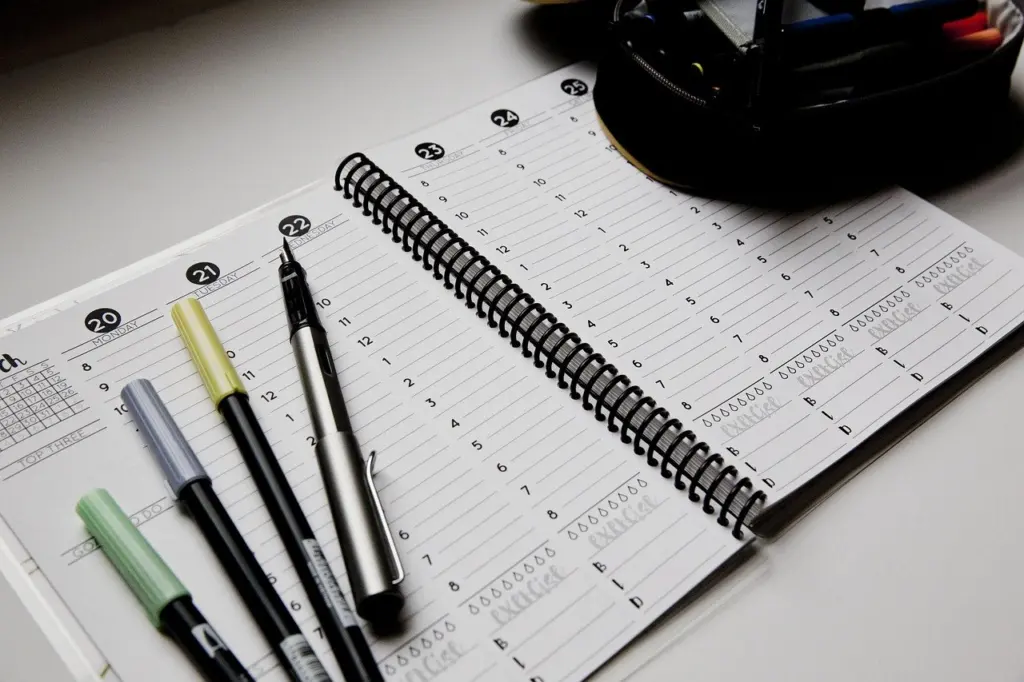
Pair tracking with reinforcement. Psychology Today says the reward does not have to be big or substantial, but should be something you enjoy or appreciate, and it works best when it follows the behaviour soon after. A cup of something you like after the daily entry is enough.
How long it takes
There is no fixed number of days after which self-discipline becomes automatic. A discipline becomes a habit when you work on it hard enough and for long enough, according to Dean Bokhari, and HabitStrong adds that nothing worthwhile in life happens instantly. Treat the plan as a structured practice window with weekly targets, not a deadline for the behaviour to run itself. If a habit still needs effort at the end, extend the final stage rather than judging the plan a failure.
Setbacks and fixes
Setbacks are part of the process, and the useful response is diagnostic. Match the problem to the fix:
- You got distracted. The University of the People advises making a note of the circumstances so you can avoid the same pitfalls again. Then adjust your surroundings or blocker settings to remove that trigger.
- One slip is turning into a spiral. Instead of getting discouraged, take notes about it and challenge yourself not to repeat it.
- The step was too big. Return to the smaller version of the action, since the plan builds from little to larger.
- Someone else’s progress is discouraging you. That is a separate habit of thought; how to stop comparing yourself to others deals with it directly.
Once these routines hold, the Personal Leadership Development Plan: A Practical Roadmap To Grow Your Influence In 90 Days – Lucidinside applies the same practice to leading other people.
Frequently asked questions
| Question | Answer |
|---|---|
| Why do people frame actions as votes for an identity? | HabitStrong says every action is a vote for the new identity you are trying to build, so even a small completed action counts as evidence that you are becoming that kind of person. |
| Is the structure fixed? | No. It is a scaffold built on supported principles: start small, prepare responses in advance and track results. Adjust the pace if a stage needs longer. |
| Is a journal or an app better for tracking? | Either works. What matters is a simple system that logs daily actions and reflections, so choose the one you will keep using. |