
A personal leadership development plan works when it turns self-leadership into a few SMART goals, scheduled practice and regular feedback, then gets reviewed on a fixed cadence. Build it as a quarter-long cycle and treat it as a living document.
If you are new to structured growth, read how to start self development first, then return here to write the plan itself.
How a leadership development plan works
IMD describes self-leadership as the practice of influencing ourselves to achieve our goals. A personal leadership development plan makes that practice concrete. CMOE defines a leadership-development plan as a detailed blueprint of the professional development and learning activities that improve leadership abilities. In practice the plan has three working parts: goals that say what will improve, activities that make it happen, and a review that shows whether it did.
The review is what turns activity into learning. Joyntly’s leadership development plan example makes the point bluntly: without reflection, development becomes a checklist instead of a growth process. Build the review into the plan from the first page rather than adding it once progress stalls.
Plan template: the elements to include
A usable plan is short enough to reread and specific enough to act on. The table below combines the components of a published leadership template with the reflection stage from the SOAR model, and shows what each element is for.
| Plan element | What goes in it | Planning use |
|---|---|---|
| Assessment | A structured look at your current leadership | Fixes the starting point so later progress has something to be compared with |
| Goals | SMART goals aligned with organizational objectives | Keeps every goal tied to something your role is expected to deliver |
| Competency matrix | Specific actions linked to the leadership competencies you want to build | Prevents the plan from becoming a list of general intentions |
| Milestones | Realistic milestones with clear timelines | Gives you checkpoints inside the quarter instead of a single end date |
| Accountability | Check-ins and progress reports | Supports follow-through and gives someone else a view of the plan |
| Reflection | A written review of what the actions taught you | Turns a checklist into a growth process |
Components and their purposes follow the Kirke Leadership plan template, and the reflection row draws on Joyntly’s plan example.
Fill the assessment and goals rows first, because everything else depends on them. The competency matrix is the step most easily skipped and the one the template calls critical: linking specific actions to desired leadership competencies is what separates a plan from a wish list. If a row stays vague, the plan will be hard to review later.
Goals to set: SMART goals and the SOAR model
SMART goals for each priority
IMD says goals need to be SMART: specific, measurable, achievable, relevant and time-bound. Use that test on every goal you write. A goal such as “be a better communicator” fails on specificity and measurability. A goal that names the behaviour, the evidence you will look for and the date you will check it passes.
IMD also advises breaking goals into milestones and celebrating small successes along the way. For a quarter-long plan this matters more than it sounds, because milestones are the only points at which you can tell a goal is drifting while there is still time to correct it. For a fuller walkthrough of the wording, see how to set personal goals.
SOAR as a planning frame
Joyntly’s example uses the SOAR model: Strategy, Opportunity, Action and Reflection. Its Opportunity stage asks where the manager needs to grow to support the strategy, which is a useful filter for choosing goals. Its Action stage gives a model of how specific an action should be: delegate one major project this quarter and review progress weekly. That single sentence carries an action, a scope, a time frame and a review cadence.
Choosing between the two
The two frameworks do different jobs, so you do not have to pick one. SMART tests the quality of an individual goal. SOAR gives the sequence, running from direction through growth areas and actions to reflection. Use SOAR to decide what deserves a place in the plan, then word each goal in SMART form. Goals worth setting are the ones that answer the opportunity question: growth areas that support what your role is trying to achieve, each with at least one concrete action you control.
Roadmap for the quarter
Order matters more than volume. The stages below take the elements above and put them in the sequence in which they are most useful.
- Assess first. Combine your own self-assessment with peer feedback so the starting point does not rest on your view alone.
- Choose the direction. Use the Strategy and Opportunity questions to decide which growth areas the plan will cover.
- Write the goals. Word each one in SMART form and attach milestones with clear timelines.
- Schedule the practice. Put focused time on your calendar and set the weekly review of each action.
- Practise in real work. Use actual projects and meetings as the place where the skills are exercised.
- Reflect and reassess. Close the quarter with a written review and a fresh assessment that feeds the next plan.
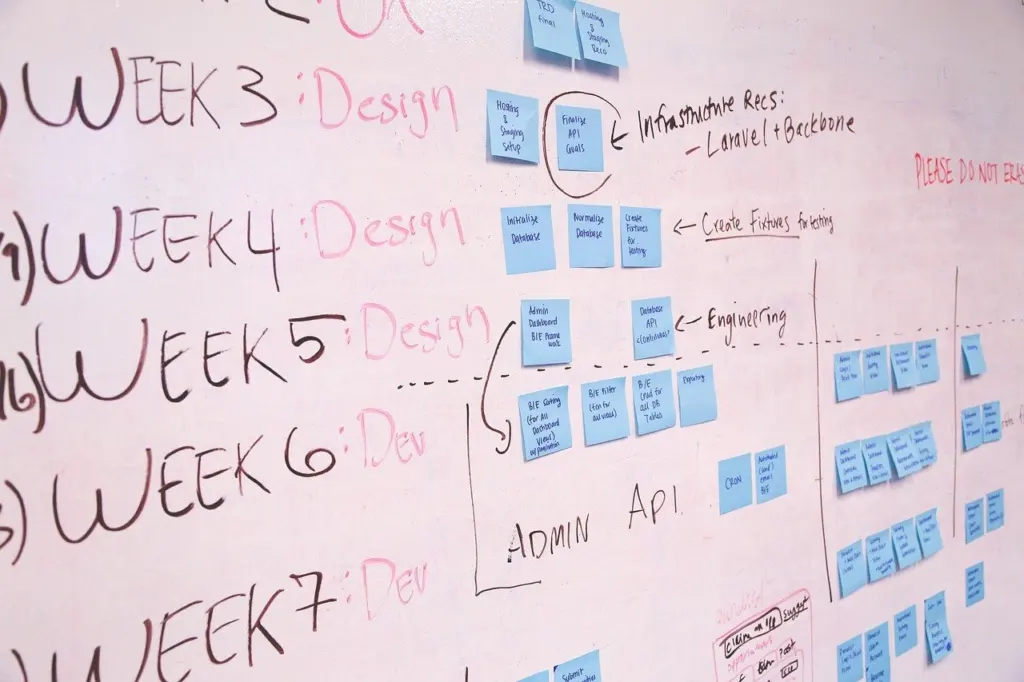
Keep the roadmap to the number of goals you can actually review each week. A plan that covers every possible skill gives you nothing concrete to check, whereas a short list is easy to review and easy to adjust. Placing milestones on a visible timeline also makes it obvious when two goals compete for the same weeks.
Habits and time blocking
A plan only changes behaviour if it reaches the calendar. IMD links self-leadership to developing habits like self-management, self-regulation and self-discipline, and recommends a planner or app to schedule time blocks for focused work. Treat those blocks as appointments for the plan: reserve them for the practice and reflection your goals call for, rather than hoping the time appears.

Habits are the delivery mechanism for goals. A goal says what will change, while a habit is the repeated behaviour that produces the change. If you want a structured way to build that consistency, How To Build Self-Discipline: An 8‑Week Practical Plan To Transform Your Habits In 2026 – Lucidinside sets out a habit-building plan you can run alongside this one.
Measuring progress and feedback
Measure progress against two reference points: the milestones in the plan and the assessment you started with. IMD advises taking time to assess your leadership journey, whether quarterly or annually, and seeking feedback from peers to gauge how far you have come. For a quarter-long plan, a quarterly assessment matches the length of the cycle, while an annual one suits a plan that spans a longer horizon.
Self-assessment alone records how you see yourself, so peer feedback adds an outside check on whether the change you feel is the change others notice. Ask for it in a form that lets people point to specific behaviours tied to your goals, and compare it with your own view rather than replacing it.
Milestones give you the in-between measurement. The plan template recommends realistic milestones with clear timelines, so a missed milestone is an early signal to adjust the action or the goal. Accountability check-ins and progress reports serve the same purpose from the outside: the template describes them as ensuring follow-through and providing necessary support.
Close each cycle with a written reflection. Record what worked, what did not and which competency needs attention next, then carry that into the next plan. That written record is what keeps the document a growth process instead of a checklist.
Frequently asked questions
Is a training course enough to develop my leadership?
No. Joyntly’s plan example says growth does not happen through passive consumption of training content. Use courses as input, but give every one an action in the plan where you apply it and a review of how it went.
Where should I keep the plan?
Keep it somewhere you will see it often. CMOE advises placing the plan where you will notice it regularly, since a plan that is out of sight is unlikely to be reviewed.
Should the plan cover a quarter or a year?
Use both horizons for different purposes. In the SOAR model, Strategy asks what you are trying to achieve over the next 12 months, while the Action stage works at the scale of a quarter. Set the direction for the year, and write the plan itself for the quarter.
What does an accountability check-in add?
It provides follow-through and support. Kirke Leadership’s template pairs check-ins and progress reports with the plan so that someone other than you sees whether the milestones are being met.